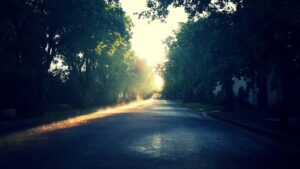



A riverwalk became brighter after new lamps were installed along the entire bank. Visitors felt safer, but swarms of insects gathered around the lights, bats changed their feeding routes, and the water remained illuminated long after the paths were empty.
Artificial light can transform nighttime habitat. Many species use darkness to feed, migrate, reproduce, and avoid predators. Insects may circle lamps until exhausted, young fish can become more visible, and birds may be drawn away from natural routes. Effects can spread beyond the lighted path because reflections travel across water.
Public safety remains important. The choice is not between complete darkness and unrestricted illumination. Designers can direct light downward, shield the river surface, use warmer wavelengths, reduce brightness, and place fixtures only where people actually walk. Motion controls and late-night dimming can provide light when needed without maintaining full intensity all night.
Timing should reflect local ecology. Migration, nesting, and breeding seasons may require additional limits. Sensitive wetlands and vegetated banks can remain dark while entrances, crossings, and gathering areas receive focused lighting. Ecologists, residents, accessibility specialists, and safety professionals should evaluate plans together.
Maintenance matters because fixtures can shift or vegetation can change how light spreads. Regular nighttime inspections reveal glare and reflections that are difficult to predict on drawings. Monitoring insects, birds, and aquatic life can show whether adjustments are working.
A successful riverfront should welcome people while preserving the living system that makes the place valuable. Darkness is not an absence of infrastructure. It is an environmental condition used by many species. Thoughtful lighting recognizes that public spaces continue to function after human visitors leave and that safety can be improved without turning every shoreline into a permanently illuminated stage.
Community expectations can change once people understand the purpose of darker areas. Signs and public programs can explain nocturnal species and encourage visitors to carry low-impact personal lights where needed. Darkness may then be experienced not as neglect, but as an intentional feature of the river ecosystem.
C. Laurent